Your complete
credit card hub.
Compare top picks by category, run the numbers on rewards and interest, and read plain-language guides — everything to make a smarter card decision.
Pick the path that fits your spending.
We'll surface the right cards, calculators, and reading for your situation — no fluff.
Citi Strata℠ Card
Blue Cash Preferred® Card from American Express
Discover it® Cash Back
NHL® Discover it® Card
Run the numbers for cash back
257 cards. One table.
| Welcome offer | Rewards rate | APR | |||
|---|---|---|---|---|---|
IHG One Rewards Premier Business Credit Card Chase · Travel Rewards $99 annual fee | 7.9/10 | Earn 140,000 Bonus Points after spending $4,000 in the first 3 months, plus 10,000 more for adding an employee card | Up to 26x points per $1 at IHG hotels; 5x on travel, dining, select business purchases, gas; 3x other | 19.24%-27.74% variable | → |
United Gateway℠ Card Chase · Travel Rewards No annual fee | 7.9/10 | Earn up to 40,000 bonus miles: 30,000 after $1,000 spend in first 3 months, plus 10,000 for adding an authorized user | 5x total miles on eligible United flights; 2x on all other United purchases; 2x at gas stations and local transit/commuting; 1x on all other purchases | 0% intro for 12 months, then 19.74%-28.24% | → |
IHG One Rewards Premier Credit Card Chase · Travel Rewards $99 annual fee | 7.8/10 | Earn 140,000 bonus points after spending $3,000 in first 3 months (reduced from up to 185,000) | 10x points at IHG hotels; 5x per $1 on travel, dining, and gas stations; 3x per $1 on all other purchases | 19.24%-27.74% | → |
IHG One Rewards Traveler Credit Card Chase · Travel Rewards No annual fee | 7.8/10 | Earn 80,000 bonus points after spending $2,000 in first 3 months (reduced from up to 125,000) | Up to 17x total points at IHG Hotels and Resorts (5x from card + IHG membership bonus); 3x on dining, utilities, select streaming services, and gas stations; 2x on all other purchases; 10,000 bonus points annually after $10,000 spending | 19.24%-27.74% | → |
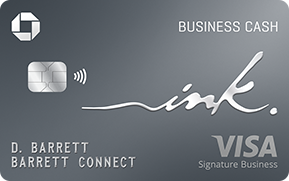
Ink Business Cash® Credit Card Chase · Cash Back No annual fee | 7.8/10 | Earn $750-$1,000 cash back after $8,000 spend in first 4 months | 5% cash back on business essentials up to $25,000 combined annually; 2% on gas stations and restaurants; 1% on all other purchases | 16.74%-24.74% | → |
Marriott Bonvoy Boundless® Credit Card Chase · Travel Rewards $95 annual fee | 7.8/10 | Earn 125,000 bonus points + 1 Free Night Award after spending $3,000 in the first 3 months; plus up to $100 in airline statement credits through 6/30/2027 | 6x points per $1 at participating Marriott Bonvoy hotels; 3x per $1 on first $6,000 annually combined at grocery stores, gas stations, and dining; 2x on all other purchases | 19.24%-27.74% | → |
Chase Sapphire Preferred® Credit Card Chase · Travel Rewards $95 annual fee | 7.7/10 | Earn 100,000 bonus points after spending $5,000 in the first 3 months (elevated limited-time offer, up from 75,000) | 5x points on Chase Travel purchases; 3x on dining at restaurants worldwide; 3x on gas stations and EV charging; 3x on vacation homes at top brands booked through eligible sites; 3x on online grocery purchases (excluding Target, Walmart, and wholesale clubs); 3x on select streaming services; 2x on all other travel; 1x on all other purchases; plus 10% anniversary bonus points on prior year spending total | 19.24%-27.49% | → |
World of Hyatt Credit Card Chase · Travel Rewards $95 annual fee | 7.7/10 | Earn up to 75,000 bonus points after qualifying purchases (previously up to 60,000) | 4x bonus points per $1 at Hyatt hotels; 2x per $1 at restaurants, airlines, transit, and fitness memberships; 1x on all other purchases; annual free night at Category 1-4 properties | 19.24%-27.74% | → |
American Express® Gold Card American Express · Travel Rewards $325 annual fee | 7.6/10 | Earn up to 100,000 Membership Rewards® points after spending $8,000 in purchases in the first 6 months | 4X points at restaurants worldwide (up to $50,000/year, then 1X); 4X points at U.S. supermarkets (up to $25,000/year, then 1X); 5X points on prepaid hotels booked through AmexTravel.com; 3X points on flights booked directly with airlines or on AmexTravel.com; 2X on prepaid car rentals and cruises through AmexTravel.com; 1X on all other eligible purchases | See Pay Over Time APR | → |
Atmos™ Rewards Ascent Visa Signature® Bank of America · Travel Rewards $95 annual fee | 7.6/10 | 50,000 bonus points after spending $2,000 in the first 90 days, plus buy one ticket and get one for just taxes and fees | 3 points per $1 on Alaska Airlines and Hawaiian Airlines purchases; 2 points per $1 on gas, EV charging, cable, streaming, and local transit (including rideshare); 1 point per $1 on all other purchases; 10% bonus on all points earned with an eligible Bank of America account | 19.49%-27.49% | → |
Should you do a balance transfer?
Adjust your debt, APR, and payment. We'll compare staying put against a 0% intro transfer — fees included.
Credit Card Articles
The annual fee on the Amex Platinum jumped from $695 to $895 at renewals starting January 2, 2026 — following Chase, which pushed the Sapphire Reserve from $550 to $795 a year earlier. Even some 'midtier' cards now charge $150. Issuers insist the fee 'pays for itself' through a thicker stack of credits, but most of those are use-it-or-lose-it coupons you have to remember to burn, and the fine print keeps shifting: Capital One trimmed Venture X lounge access for authorized users and guests on February 1, 2026, and Chase quietly cut its Ultimate Rewards–to–Hyatt transfer ratio from 1:1 to 4:3. Meanwhile the average interest-accruing card APR sits at 22.15%. Here's a myth-busting, numbers-first way to decide whether your fee card still earns its keep — and the one situation where no rewards card, at any fee, is worth carrying.
For a few months it looked settled: in January 2025 the CFPB finalized a rule to strip roughly $49 billion in medical debt off the credit reports of about 15 million Americans. Then a federal court vacated the whole thing in July 2025, ruling it clashed with the Fair Credit Reporting Act — and as of 2026 that rule is dead. So the reassuring headline you may have filed away ('medical bills can't hurt your credit anymore') is only half true, and the half that's wrong can quietly cost you 25 to 100 points right when you're applying for a mortgage. Here's exactly what still protects you, what doesn't, and the negotiation moves that shrink a medical balance before it ever reaches a credit bureau.
Credit card APRs are stuck above 20% — with new-card offers averaging around 25% — while personal loan rates have quietly eased to a three-year average of 13.82% (week ending July 5, 2026). That gap is why debt consolidation is back on the table for millions of Americans staring at a balance that barely shrinks each month. But 'consolidate' isn't one move: a fixed-rate personal loan and a 0% balance-transfer card solve the same problem in very different ways, and picking wrong can cost you hundreds. This is a numbers-first walkthrough — a $10,000 worked example, the two questions that decide which tool wins, and the one behavior that quietly sinks most consolidations no matter which route you take.
For years, splitting a $200 purchase into four Klarna or Affirm payments was a ghost — invisible to your FICO score no matter how you handled it. That era is ending. FICO's new Score 10 BNPL and Score 10 T BNPL models, unveiled in June 2025 and now rolling out to lenders through 2026, fold buy-now-pay-later loans into the number that decides your mortgage rate and card approvals. With roughly 96 million Americans expected to use BNPL this year and 47% of users admitting they've paid one late in the past 12 months, the stakes just changed for a habit most people treated as consequence-free. Here's what actually flows into your score now, why FICO says 85% of borrowers will move less than 10 points, who quietly benefits, and the loan-stacking trap that can flip BNPL from a credit-builder into a red flag.
Roughly 5.5 million Americans are in default on federal student loans, and about 12 million are either seriously behind or already in default. In January the Education Department hit pause on involuntary collections — no wage garnishment, no seized tax refunds — while it rolls out a new repayment system that went live July 1. That pause is a gift with an expiration date: once it lifts, the government can take up to 15% of your paycheck without a court order. Here's how to tell if you're actually in default, the three doors out, and why the July 1 rulebook change makes acting now cheaper than acting later.
Mortgage rates get the headlines, but the loan quietly breaking American budgets in 2026 is the one in the driveway. The average new-car payment just set a record at $770 a month, the typical new-car loan now runs 6.96% (and 11.43% on used), and the share of subprime borrowers behind on their car loans has climbed to its highest level in 32 years. Meanwhile 5.6% of all auto debt is now 90-plus days delinquent — past the previous peak set during the 2010 financial-crisis aftermath. Here's the real math behind the squeeze, why your credit score matters more than the Fed here, and five moves that shave real money off a car loan before you sign.
The Fed held rates again on June 17 and its own dot plot now leans toward a hike, not a cut. Yet the average card charges about 21% APR (and closer to 23.79% on new offers) while the prime rate sits at just 6.75%. Here's the part almost no one explains: the gap between those two numbers — the 'margin' issuers add on top of prime — has climbed to an all-time high of roughly 14.3 points, meaning nearly two-thirds of your rate is a choice your issuer made, not a number the Fed handed down. Here's how the math works, why a rate cut won't rescue you, and four moves that beat a rate you can't control.
Americans ran an estimated $70 billion through Buy Now, Pay Later in 2025, and the bill is starting to land. Nearly half of BNPL users — 47% — say they paid late in the past year, up from 34% just two years ago, while 63% are carrying more than one plan at once and 25% are stacking three or more. Regulators call the invisible pile 'phantom debt,' and as of this year FICO's newest scores can finally see it. Here's what the data really shows, why four-easy-payments is still debt, and the plan to dig out before it dents your credit.
On July 1, the biggest reshuffle of federal student loan repayment in a decade goes live. SAVE, PAYE and ICR are on their way out, two brand-new plans — RAP and the Tiered Standard — take their place, and the 7.5 million borrowers parked in SAVE get a 90-day notice to choose or be moved for them. Buried in the same overhaul is a quiet win: the auto-pay discount quadruples from 0.25% to a full 1%. Here's exactly what changes, the clock you're now on, and how to run the numbers before you pick.